Author Archives: jzraskin@gmail.com

Headphone request

Dear 5R families,

Well… We’ve got our iPads! In order to use a wide range of media this year, and access video content, every student will also need to bring to school and keep a pair of personal headphones. These will be stored in the classroom through the year and will return home in June. Any headphones will do, except the “earbud” variety. Unfortunately, as we’ve all experienced, they can just get too tangled too easily to be functional for our purposes. If your headphones have a case, please send it as well. Otherwise, a re-sealable zip-lock style bag will do. Thanks for your support!

193617487

The Locker Problem: What is Math all About?

What is math all about?

There is a myth that there are people who are “math people” and others who just aren’t “math people”. This sort of dangerous thinking has a history of convincing millions that they just aren’t good at math, and that, is that. Most people, when they say someone “isn’t good at math” mean that that person doesn’t calculate operational answers quickly, or accurately. Most of us have been taught that that is what math is all about. Memorizing a series of steps to solve a problem, and get the known, correct answer. Luckily, all of these ideas have been proven to be not only dangerous, but wrong.

Fluency and computational accuracy are part of math, no doubt. They’re as much part of math as spelling and grammar are part of writing. In a way, they are the spelling and grammar of math. But they aren’t the language, they aren’t the poetry, and they are far, far from all that makes a mathematician. No one would seriously argue that spelling and grammar are the most important parts of writing. They’re just the easiest place for us to notice inaccuracies.

So… What makes for a mathematician?

This year in grade five we’re going to work on building the behaviours that are so key for skilled mathematicians. Computational fluency and accuracy are part of this (you do need to learn your times tables!), but what else? What other strengths do we need to build to become capable mathematicians?

To begin thinking about this, in the first week, each student has drawn and labeled a picture of what they imagine, when they think of a mathematician. We’ve seen lab coats, glasses and a whole lot of men.

Now, to push our thinking we’re going to try a problem where computational fluency isn’t going to solve things easily, or right away. We’re going to try The Locker Problem.

Note: If you watch the video be sure to stop it where indicated (around 1:56) to try to solve it yourself! Keep trying, and remember: We can do hard things.

A Writer’s Notebook

Next week your child will begin collecting and developing writing ideas in a notebook in Writer’s Workshop. During writing workshop we will explore many different genres of writing and study the craft of well-known authors to improve our own writing skills. All students have been given their own writer’s notebook, but I would like your child to personalize his or her notebook to generate a greater sense of ownership. This notebook will be the place where creative ideas, personal feelings, and new characters will be created and developed throughout the year. You won’t believe the growth your child will make this year as a writer! It will be fun for you to browse through your child’s notebook as the year goes on to observe the constant progress.

The idea is that we design our notebooks to be an inspiration of stories for us. To best serve this purpose, we can decorate them with images of meaningful people, places and moments of our lives. Please begin to collect meaningful and inspiring items such as:

Photos (They will be cut and pasted on the notebook, so you may want to make copies of the photos)

Souvenirs (tickets from special events, pictures from brochures, etc.)

Magazine Pictures (Students can cut out fun pictures from magazines of animals, favorite foods, favorite celebrities, meaningful words, etc.)

Quotes (inspiring words about writing or other topics)

Scrapbook Materials (stickers, decorative paper, stamps, etc.)

Be Creative! (Bring anything else that you can think of!)

Please remind your child to choose the materials he or she will use to decorate the writer’s notebook and bring the materials to school in an envelope or folder by Friday, August 26.

See the presentation below for some ideas!

The First Day of School!

What a fantastic first day!

From the moment they entered the room today, the 5R students began to bring the classroom to life. A round of Welcome Back Bingo got everyone speaking with old and new friends, then we organized ourselves with our lockers.

After recess we ventured over to the new Makerspace Art Studio for our biweekly two-hour art session, and got to meet our two visual art teachers, Mr P and Dr A. After lunch I shared a letter I’d written to the class in June, and had been unable to send, and students all had a chance to reply. Finally, Frau George came to us for a first German session, and led a class with photo interpretation and poster-making, while she worked with students to assess their German levels.

After a quick end of the day game, students received their schedules and we went to the lockers to collect our belongings and head home. A very full, and very successful first day!

Please enjoy the below photos!

20160816_094345 20160816_104436 20160816_104908 20160816_105028 20160816_105038 20160816_114723 20160816_114731 20160816_114736 20160816_114738 20160816_114801 20160816_114806 20160816_114809 20160816_120126 20160816_141120 20160816_143001

Many Thanks

  • For photos of this morning’s events, click here.
  • For access to a video of the celebration, click here.

Dear 5R Parents,

Thank you for being at the celebration this morning and for all your lovely, kind words after the ceremony. Thank you also for the lovely gifts and sending along all the treats for the class to share. I so appreciate your thoughtfulness and all the support you have shown me throughout the year. I truly will miss this remarkable group of students!

Would you believe that when we got back to class, the first thing the students wanted to do was a full class dance party?

As we head off for the holidays, I’d like, in particular, so send special wishes with Oliver, Haya, Evelina, Emanuele, Amelia, Max and Krish as they prepare to start brand new chapters in their lives beyond ZIS. Keep in touch with us! To the rest of you, good luck for middle school! I can’t wait to see you around and to hear all your stories.

I wish all of you and your families a safe, relaxing, happy vacation!

With Gratitude,

Jamie

Child Protection – Session 3

The theme of today’s session on child protection was secrets, who to talk to, and what secrets should never be kept.

Ms Jill began by reading the book: Some Secrets Should Never be Kept, a story written to help keep kids safe from sexual abuse.

What secrets should never be kept?

  • Secrets that make you feel uncomfortable or bad.
  • Secrets like someone saying “never tell your parents about this…”

How do a lot of children feel when they are abused?

  • ashamed, guilty, frightened, worried, nervous etc.
  • many children are threatened with consequences by an abuser if they tell anyone.
  • as a consequence they feel worried about how them telling what happened will impact others.

Ms Jill discussed how it is against the law for an adult to touch a child’s private parts, have the child touch their private parts, or take inappropriate or naked photos of children. Several children shared stories of when people had taken photos of them that made them uncomfortable (though none of these were clearly abusive).

The conversation then went to the subject of “What happens to an adult who is doing something abusive to children?” Ms Jill told a story about working at a previous school where a 4th grade girl came to her after a session and shared that she was being sexually abused at home. Ms Jill shared that after being told this, she was legally required to contact the police, who then had to hear the story directly from the girl, prior to arresting the adult who was abusing her. The girl stayed with other family members for some time, the girl was protected and the adult who was abusing her was removed from the situation.

Eventually the discussion went towards how despite all of these very scary things that do happen, these things happen very very rarely and these discussions are not designed to make people fearful. These discussions are just designed to help us know what to do, how to be safe, in these really difficult, very frightening, but thankfully very rare, situations.

In discussing photos of naked children, Ms Jill made the distinction between photos of children that are innocent, like baby pictures in the bath, and those that are harmful, that are of older children, or just feel like they’re not a good thing. Students were instructed that if they come across pictures that are inappropriate of naked children, while online or anywhere, they need to tell an adult they trust, so that the children can be protected.

Finally, we discussed who you could tell if you came across something wrong, or something wrong happened to you. We discussed the concept of three circles of trust. People who to turn to first, the closest people who you would tell if you could, others you could turn to if the first people weren’t options or didn’t believe you, and a third circle of who you could turn to if the first two groups weren’t options.

This session concludes this series of lessons.

Child Protection Session #2

20160602_110342

Today Ms Jill returned to our class for our second Child Protection session. The focus of today’s session was touch. She approached the discussion by dividing touch into four categories: Safe, Unsafe, Wanted and Unwanted.

These she defined as:

  • Unsafe: Touch that can be hurtful, kicking, pushing etc., as well as touching of private body parts.
  • Safe: Touch that won’t be hurtful, and isn’t threatening. 
  • Wanted: Touch that feels good and respectful. Both the toucher and the touched are comfortable with this.
  • Unwanted: Touch that you don’t want. It might not be ill intended, but you don’t want it, like too much tickling or affection in a way that feels uncomfortable.

Most touches, she stated, were safe and wanted. Touch, in fact is a basic human need. We read the book “My Body is Private“. She made the analogous comparison to the privacy of communications: mail, chats etc. We spoke about different privacy expectations in different homes, regarding closed doors, knocking and more. She introduced some correct vocabulary for private body parts, including breasts, penis, vagina and bottom, so that we could all discuss things accurately when necessary. Then she introduced the Touching Rule.

The Touching Rule: No one should touch your private body parts except to keep you clean and healthy.

In our school, the rule with any kind of touching is: if someone says “stop” or “no”, the person doing the touching must stop immediately. You get to say how and when people are allowed to touch you.

In response to a question about Unsafe/Unwanted touch, Ms Jill introduced some safety steps.

  1. Say words that mean NO
  2. Get away
  3. Tell an adult

Some students shared stories where they felt uncomfortable in interactions with strangers. We then discussed our “gut feelings”, trusting our impulses when we’re uncomfortable, and erring on the side of caution when we don’t know someone’s intentions. Some families, Ms Jill said, have a “safe word”, a word that signifies to all members of the family that a message being communicated is real, and a person is to be trusted.
 

Child Protection Lesson #1

This morning we had our first Child Protection lesson with Ms. Jill.  To begin the lesson, Ms. Jill taught the students a mindfulness breathing technique called “Sixteen Seconds”. She presented this technique as a way students could help themselves settle down when they felt awkward or uncomfortable. In addition to encouraging the students to use this technique, she gave students permission to step out of the room for a few minutes if they were uncomfortable at any point. She then made sure that students understood that the purpose of these child protection lessons is to teach them things that will help them be safe.

The topic of today’s lesson was communication. The students discussed three types of communication:  aggressive, passive, and assertive.

These are notes the students made with Ms. Jill:

  • Aggressive Communication:
    • Threatening
    • Disrespectful (words, tone)
    • Rude (words, tone)
    • Ignoring
    • Physical (punching, hitting, kicking, shoving, choking)
    • Takes care of ME (not taking care of other people)
  • Passive Communication:
    • Avoid communicating
    • Ignoring (so that you don’t have to deal with something)
    • Letting people get their way
    • Takes care of OTHERS
  • Assertive Communication:
    • Involves both what you say AND how you say it.  Tone of voice matters.  Body language matters.
    • Uses “I” messages in order to communicate what you feel, think or need.  Ex:   “I feel  sad when I hear rude words because they hurt my feelings. I like playing with people who use nice words”, or, “I feel upset when you do not take care of my things because I then need to replace them. I need you to take care of my things like I do if you are going to borrow them.”
    • Includes active listening (listening with your whole self).  This means using good eye contact (not staring or glaring), speaking in a calm, even tone of voice, paraphrasing what you heard the other person say, clarifying anything that is not clear, and asking non-judgmental questions.
    • Can communicate a firm message in a way that gets the point across but helps everyone feel respected.
    • Takes care of EVERYONE

After discussing the different types of communication, Ms. Jill and individual students role-played different kinds of communication in everyday situations (i.e. you need to get your pencil back from someone who is using it) and then discussed that you might have to use assertive communication in situations to keep yourself safe.

Then, students practiced active listening in pairs, first with an everyday conversation (i.e. about the weekend) and then when discussing a conflict.

At the end of the lesson, we answered questions and talked about individual situations.  Some interesting tips/thoughts that came from the wrap-up discussion:

  • In these discussions, everyone has the right to say “no” if they are asked to share their thoughts or role-play in front of the group.
  • “I” messages work best when you’ve had a chance to calm down, rather than in an angry moment.  The breathing technique we learned at the beginning of the session is one way students can help themselves calm down to a level where they can use “I” messages effectively.
  • When working to solve a conflict, don’t say “always” or “never” , i.e. “You ALWAYS say you’re going to give me a turn and then you NEVER do!”

Our next session with Ms. Jill will be Thursday.  I will blog again then so that parents stay informed of what we discussed in class.

This Tuesday… Bike Safety sessions!

Just a reminder that on Tuesday May 31 5R will have our bike safety day.  Below is the letter that was sent out a couple of weeks ago.

Dear Parents,

The traffic and safety education team of the Kantonspolizei Zürich aims to educate students in grade 5 about riding a bicycle on Swiss roads.  Practical exercises will focus on challenging traffic situations.

The practical bike training will take place on:

Monday, 30th May 2016 Tom Corbett
Tuesday, 31st May 2016 Jamie Raskin
Wednesday, 1st June 2016 Katherine Deutsch
Thursday, 2nd June 2016 Alice Sikora
Friday, 3rd June 2016 Jan Vinclair

For this purpose, your child will need his/her own bicycle. It will be possible to store bikes in the Lower School garage during this week. All bikes will need to be picked up by Friday, 3rd June.

The training consists of four parts:

  1. Theory
  2. Bicycle inspection
  3. Practice on school ground
  4. Riding a bike on the road under professional supervision and with walkie-talkie headsets

It is the parents‘ decision whether children will be allowed to participate in part 4 (see above). We strongly recommend that your child participates with his/her own bicycle which must be checked at home in advance according to the following inspection list:

  • Two functional brakes
  • White front reflector
  • Red back reflector
  • Reflectors on the pedals
  • Front and back lights (only for the night or during bad visibility)
  • Bike lock
  • Bell
  • Bike helmet
  • Private liability insurance

Your child will only be allowed to participate if the checklist is complete.

Please support your child in preparing for this practical bike training.

If you have any further questions, please do not hesitate to contact me (in German). Phone: 044 247 37 10, E-Mail: sali@kapo.zh.ch

Kind regards,

Ciriaco Salierno, traffic instructor

5R Exhibition Gallery

What a process, and what a night!

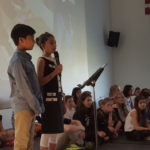
In many ways the PYP exhibition is the culminating experience of the PYP journey and of elementary school. This past Tuesday’s demonstration of learning and creativity was truly an empowering one. I lost count of the number of people (parents, teachers and others), who approached me in admiration of the work of our grade 5s.

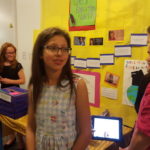
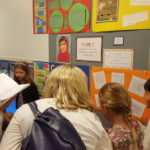
Enjoy the collection of images below!

Also, please continue to keep an eye on the Grade 5 blog. Posted today were important details regarding our Middle School simulation over the coming weeks. Students will be on a very different schedule at school and may even have… gulp… homework!