Category Archives: Life in 5R

Child Protection – Session 3

The theme of today’s session on child protection was secrets, who to talk to, and what secrets should never be kept.

Ms Jill began by reading the book: Some Secrets Should Never be Kept, a story written to help keep kids safe from sexual abuse.

What secrets should never be kept?

  • Secrets that make you feel uncomfortable or bad.
  • Secrets like someone saying “never tell your parents about this…”

How do a lot of children feel when they are abused?

  • ashamed, guilty, frightened, worried, nervous etc.
  • many children are threatened with consequences by an abuser if they tell anyone.
  • as a consequence they feel worried about how them telling what happened will impact others.

Ms Jill discussed how it is against the law for an adult to touch a child’s private parts, have the child touch their private parts, or take inappropriate or naked photos of children. Several children shared stories of when people had taken photos of them that made them uncomfortable (though none of these were clearly abusive).

The conversation then went to the subject of “What happens to an adult who is doing something abusive to children?” Ms Jill told a story about working at a previous school where a 4th grade girl came to her after a session and shared that she was being sexually abused at home. Ms Jill shared that after being told this, she was legally required to contact the police, who then had to hear the story directly from the girl, prior to arresting the adult who was abusing her. The girl stayed with other family members for some time, the girl was protected and the adult who was abusing her was removed from the situation.

Eventually the discussion went towards how despite all of these very scary things that do happen, these things happen very very rarely and these discussions are not designed to make people fearful. These discussions are just designed to help us know what to do, how to be safe, in these really difficult, very frightening, but thankfully very rare, situations.

In discussing photos of naked children, Ms Jill made the distinction between photos of children that are innocent, like baby pictures in the bath, and those that are harmful, that are of older children, or just feel like they’re not a good thing. Students were instructed that if they come across pictures that are inappropriate of naked children, while online or anywhere, they need to tell an adult they trust, so that the children can be protected.

Finally, we discussed who you could tell if you came across something wrong, or something wrong happened to you. We discussed the concept of three circles of trust. People who to turn to first, the closest people who you would tell if you could, others you could turn to if the first people weren’t options or didn’t believe you, and a third circle of who you could turn to if the first two groups weren’t options.

This session concludes this series of lessons.

Child Protection Session #2

20160602_110342

Today Ms Jill returned to our class for our second Child Protection session. The focus of today’s session was touch. She approached the discussion by dividing touch into four categories: Safe, Unsafe, Wanted and Unwanted.

These she defined as:

  • Unsafe: Touch that can be hurtful, kicking, pushing etc., as well as touching of private body parts.
  • Safe: Touch that won’t be hurtful, and isn’t threatening. 
  • Wanted: Touch that feels good and respectful. Both the toucher and the touched are comfortable with this.
  • Unwanted: Touch that you don’t want. It might not be ill intended, but you don’t want it, like too much tickling or affection in a way that feels uncomfortable.

Most touches, she stated, were safe and wanted. Touch, in fact is a basic human need. We read the book “My Body is Private“. She made the analogous comparison to the privacy of communications: mail, chats etc. We spoke about different privacy expectations in different homes, regarding closed doors, knocking and more. She introduced some correct vocabulary for private body parts, including breasts, penis, vagina and bottom, so that we could all discuss things accurately when necessary. Then she introduced the Touching Rule.

The Touching Rule: No one should touch your private body parts except to keep you clean and healthy.

In our school, the rule with any kind of touching is: if someone says “stop” or “no”, the person doing the touching must stop immediately. You get to say how and when people are allowed to touch you.

In response to a question about Unsafe/Unwanted touch, Ms Jill introduced some safety steps.

  1. Say words that mean NO
  2. Get away
  3. Tell an adult

Some students shared stories where they felt uncomfortable in interactions with strangers. We then discussed our “gut feelings”, trusting our impulses when we’re uncomfortable, and erring on the side of caution when we don’t know someone’s intentions. Some families, Ms Jill said, have a “safe word”, a word that signifies to all members of the family that a message being communicated is real, and a person is to be trusted.
 

Child Protection Lesson #1

This morning we had our first Child Protection lesson with Ms. Jill.  To begin the lesson, Ms. Jill taught the students a mindfulness breathing technique called “Sixteen Seconds”. She presented this technique as a way students could help themselves settle down when they felt awkward or uncomfortable. In addition to encouraging the students to use this technique, she gave students permission to step out of the room for a few minutes if they were uncomfortable at any point. She then made sure that students understood that the purpose of these child protection lessons is to teach them things that will help them be safe.

The topic of today’s lesson was communication. The students discussed three types of communication:  aggressive, passive, and assertive.

These are notes the students made with Ms. Jill:

  • Aggressive Communication:
    • Threatening
    • Disrespectful (words, tone)
    • Rude (words, tone)
    • Ignoring
    • Physical (punching, hitting, kicking, shoving, choking)
    • Takes care of ME (not taking care of other people)
  • Passive Communication:
    • Avoid communicating
    • Ignoring (so that you don’t have to deal with something)
    • Letting people get their way
    • Takes care of OTHERS
  • Assertive Communication:
    • Involves both what you say AND how you say it.  Tone of voice matters.  Body language matters.
    • Uses “I” messages in order to communicate what you feel, think or need.  Ex:   “I feel  sad when I hear rude words because they hurt my feelings. I like playing with people who use nice words”, or, “I feel upset when you do not take care of my things because I then need to replace them. I need you to take care of my things like I do if you are going to borrow them.”
    • Includes active listening (listening with your whole self).  This means using good eye contact (not staring or glaring), speaking in a calm, even tone of voice, paraphrasing what you heard the other person say, clarifying anything that is not clear, and asking non-judgmental questions.
    • Can communicate a firm message in a way that gets the point across but helps everyone feel respected.
    • Takes care of EVERYONE

After discussing the different types of communication, Ms. Jill and individual students role-played different kinds of communication in everyday situations (i.e. you need to get your pencil back from someone who is using it) and then discussed that you might have to use assertive communication in situations to keep yourself safe.
Then, students practiced active listening in pairs, first with an everyday conversation (i.e. about the weekend) and then when discussing a conflict.

At the end of the lesson, we answered questions and talked about individual situations.  Some interesting tips/thoughts that came from the wrap-up discussion:

  • In these discussions, everyone has the right to say “no” if they are asked to share their thoughts or role-play in front of the group.
  • “I” messages work best when you’ve had a chance to calm down, rather than in an angry moment.  The breathing technique we learned at the beginning of the session is one way students can help themselves calm down to a level where they can use “I” messages effectively.
  • When working to solve a conflict, don’t say “always” or “never” , i.e. “You ALWAYS say you’re going to give me a turn and then you NEVER do!”

Our next session with Ms. Jill will be Thursday.  I will blog again then so that parents stay informed of what we discussed in class.

This Tuesday… Bike Safety sessions!

Just a reminder that on Tuesday May 31 5R will have our bike safety day.  Below is the letter that was sent out a couple of weeks ago.

Dear Parents,

The traffic and safety education team of the Kantonspolizei Zürich aims to educate students in grade 5 about riding a bicycle on Swiss roads.  Practical exercises will focus on challenging traffic situations.

The practical bike training will take place on:

Monday, 30th May 2016 Tom Corbett
Tuesday, 31st May 2016 Jamie Raskin
Wednesday, 1st June 2016 Katherine Deutsch
Thursday, 2nd June 2016 Alice Sikora
Friday, 3rd June 2016 Jan Vinclair

For this purpose, your child will need his/her own bicycle. It will be possible to store bikes in the Lower School garage during this week. All bikes will need to be picked up by Friday, 3rd June.

The training consists of four parts:

  1. Theory
  2. Bicycle inspection
  3. Practice on school ground
  4. Riding a bike on the road under professional supervision and with walkie-talkie headsets

It is the parents‘ decision whether children will be allowed to participate in part 4 (see above). We strongly recommend that your child participates with his/her own bicycle which must be checked at home in advance according to the following inspection list:

  • Two functional brakes
  • White front reflector
  • Red back reflector
  • Reflectors on the pedals
  • Front and back lights (only for the night or during bad visibility)
  • Bike lock
  • Bell
  • Bike helmet
  • Private liability insurance

Your child will only be allowed to participate if the checklist is complete.

Please support your child in preparing for this practical bike training.

If you have any further questions, please do not hesitate to contact me (in German). Phone: 044 247 37 10, E-Mail: sali@kapo.zh.ch

Kind regards,

Ciriaco Salierno, traffic instructor

5R Exhibition Gallery

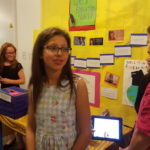
What a process, and what a night!

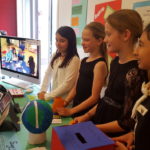
In many ways the PYP exhibition is the culminating experience of the PYP journey and of elementary school. This past Tuesday’s demonstration of learning and creativity was truly an empowering one. I lost count of the number of people (parents, teachers and others), who approached me in admiration of the work of our grade 5s.

Enjoy the collection of images below!

Also, please continue to keep an eye on the Grade 5 blog. Posted today were important details regarding our Middle School simulation over the coming weeks. Students will be on a very different schedule at school and may even have… gulp… homework!

Student-led Conferences

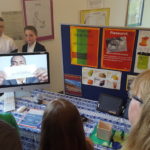
Student-led conferences are one of my favourite features of the PYP. It’s an opportunity for students to really take control, and demonstrate their understanding of their learning, parents to get a snapshot of their children’s school lives, and teachers to watch their students interact with their families. So many great insights! 🙂

Thank you all for coming out today. Please enjoy these photos and don’t miss Amelie and Rachel’s short film!


What Should I Read? from ZIS Grade 5 Mr Raskin on Vimeo.

Sign Up for Student Led Conferences!

Student Led Conferences are coming up on Tuesday, March 15!  On this day, students will have an opportunity to share their learning and growth with their parents.
Important information:
  • There will be no regular classes on that day.
  • Each child will have a passport.  As they visit the different classes/stations, they will check off or stamp this passport.  In the homeroom class, you’ll hear about their progress in literacy (reading and writing), Unit of Inquiry, mathematics, and on their learning path goals).  You’ll also visit single subject classes (PE, music, German, and art).
  • This is a student-led conference, rather than a traditional parent/teacher conference.  Your child will lead the conference, and teachers will not be involved in giving feedback.
  • Follow this link to open our class’s sign-up sheet.  Sign up for a slot either in block 1 (8:30-10:00 AM), block 2 (10:30 AM-12:00 PM), or block 3 (12:30-2:00 PM).  On the conference day, your child will begin in either our classroom or in the single subject classrooms.  The children and I will work out their starting points together.
  • Please attend during the block for which you sign up, because we want to keep the number of families in at one time to a manageable number.
  • Sibling care will be offered in the library.  However, children under 2 cannot be left in the library.
  • Students currently receiving Student Support Services or students who feel they might benefit from Learning Support or EAL Support in middle school can sign up here to have an informal meeting with Mrs. Steffen and Mrs. Langford to discuss the options available, along with their parents. Any family is welcome to sign up, but this is not necessary for all grade 5 students.

Here are the links to sign up (same as those embedded above):

Student Led Conference sign-up

Meet with Mrs. Langford and Mrs. Steffen to discuss elective options

ISAs and Strep Throat

Dear 5R families,

Today’s first day of ISAs went well. The students chose to set up the classroom “like an English school”, which means I suppose desks in rows. Most students had their water bottles and reading books at hand and worked diligently to complete the tasks in the given time.

Set up “just like an English Classroom” for the ISAs

Tomorrow will be the final day of this year’s testing. You will receive the results in several months. As mentioned in our grade level ISA blog post, these results give an interesting snapshot of student performance in a particular way on a particular day. They are primarily used to collect data about how we at ZIS compare in these sorts of assessments to like schools globally. Students are encouraged to sleep well the night before, and try their best, but not to stress or feel any undue anxiety. Most students find the day’s different structure novel and interesting.


On another note, we have just received notice of a case of strep throat in our class. I’ve attached a document to this post which give some detail about the condition, and suggests measures to treat and avoid infection. Please read and keep an eye on your child.

ZIS Strep Throat Guidelines


Be a part of the ZIS TV team!

ZIS LS TV Application – 2015/2016 Terms 3 & 4

Dear friends,

Happy New Year! It is time to welcome new members to ZIS LS TV!

At ZIS LS TV, you will get a chance to meet people, cover events, create documentaries, report the latest happenings in school & more!

Join the media team and put your ideas into action! Create content that you’d like to share via the Lower School online news channel.

Last term, a storyteller/singer/song writer liked the interview ZIS LS TV did with her that she has posted it on her website! Check it out at: http://www.courtneycampbell.com

What? ZIS LS TV application.

Who? A total of 8 students will be selected from Grade 4 & 5. You? Why not?

When? Application deadline: 18 January 2016

Weekly meetings: 3.30-4.30pm, Every Tuesday, After School terms 3 & 4.

How?

  1. Fill up this application form: http://goo.gl/forms/SXAECXTTjv
  2. Create a short video (maximum 20 seconds) about why you would like to be on the media team. See the application form for information.

Good to know – ZIS LS TV is considered a third after school activity. Students in ZIS LS TV are allowed to select a further two after school activities that take place at a different time.

Looking forward to welcoming you as a member of ZIS LS TV!
🙂 ZIS LS TV team + Clement